
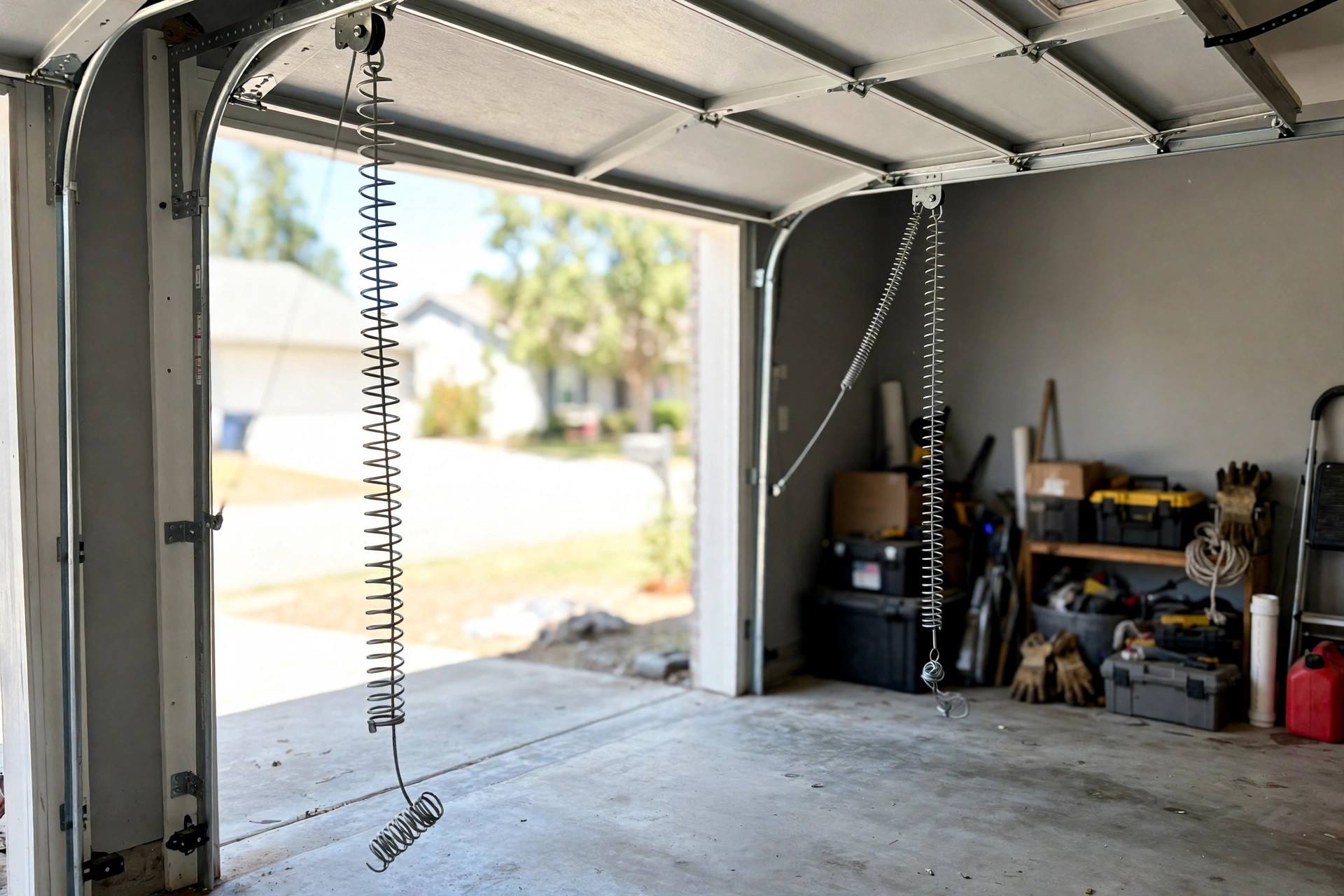
Broken Extension Spring Replacement
Broken Extension Spring Replacement is a spring-only service from Garage Door Spring Repair USA. This page explains broken extension spring replacement in full: what the job covers, how it is sized, and what a finished broken extension spring replacement job should feel like, so you can tell a complete job from a rushed one.
Safety note for broken extension spring replacement: Spring tension work during broken extension spring replacement is trained-technician work. Do not wind, unwind, or adjust a spring under tension at home during broken extension spring replacement, and do not force a broken-spring door with the opener.
How extension springs fail
Extension springs run along the side tracks and stretch as the door closes, then contract to help lift it. They are common on older and lighter doors, and when one snaps the door often drops on one side, lifts crookedly, or will not open at all. A slack spring hanging along the track, or a door that suddenly feels lopsided, points to this system rather than to the opener.
A snapped extension spring without a containment cable can whip across the garage, which is why the safety cable through the centre of each spring matters so much. Never run an extension-spring door without that cable in place, and never stand in the path of a spring that is under tension.
Sizing an extension replacement
Extension springs are matched by weight rating, length, and door size, and the pair must match each other so the door lifts evenly. A spring rated for a lighter door will stretch out and fail early on a heavier door, while an oversized spring can yank one side up faster than the other.
If insulation or a heavier panel has been added since the door was fitted, the old spring rating may no longer suit the door. That weight change is checked before a new spring is chosen, rather than simply copying the rating printed on the failed part.
What the job includes
The technician secures the door, releases tension safely, and replaces the failed spring together with its safety cable if the cable is frayed, kinked, or missing. Pulleys and cables on both sides are checked, because an extension system only lifts evenly when both sides pull together.
After fitting, the door is tested through its full travel for even lift, a level close, and no jerking or binding. If one side still lags, the job is not finished until the cause — spring mismatch, pulley wear, or cable slack — has been found.