
Extension to Torsion Conversion
Extension to Torsion Conversion is a spring-only service from Garage Door Spring Repair USA. This page explains extension to torsion conversion in full: what the job covers, how it is sized, and what a finished extension to torsion conversion job should feel like, so you can tell a complete job from a rushed one.
Safety note for extension to torsion conversion: Spring tension work during extension to torsion conversion is trained-technician work. Do not wind, unwind, or adjust a spring under tension at home during extension to torsion conversion, and do not force a broken-spring door with the opener.
What conversion changes
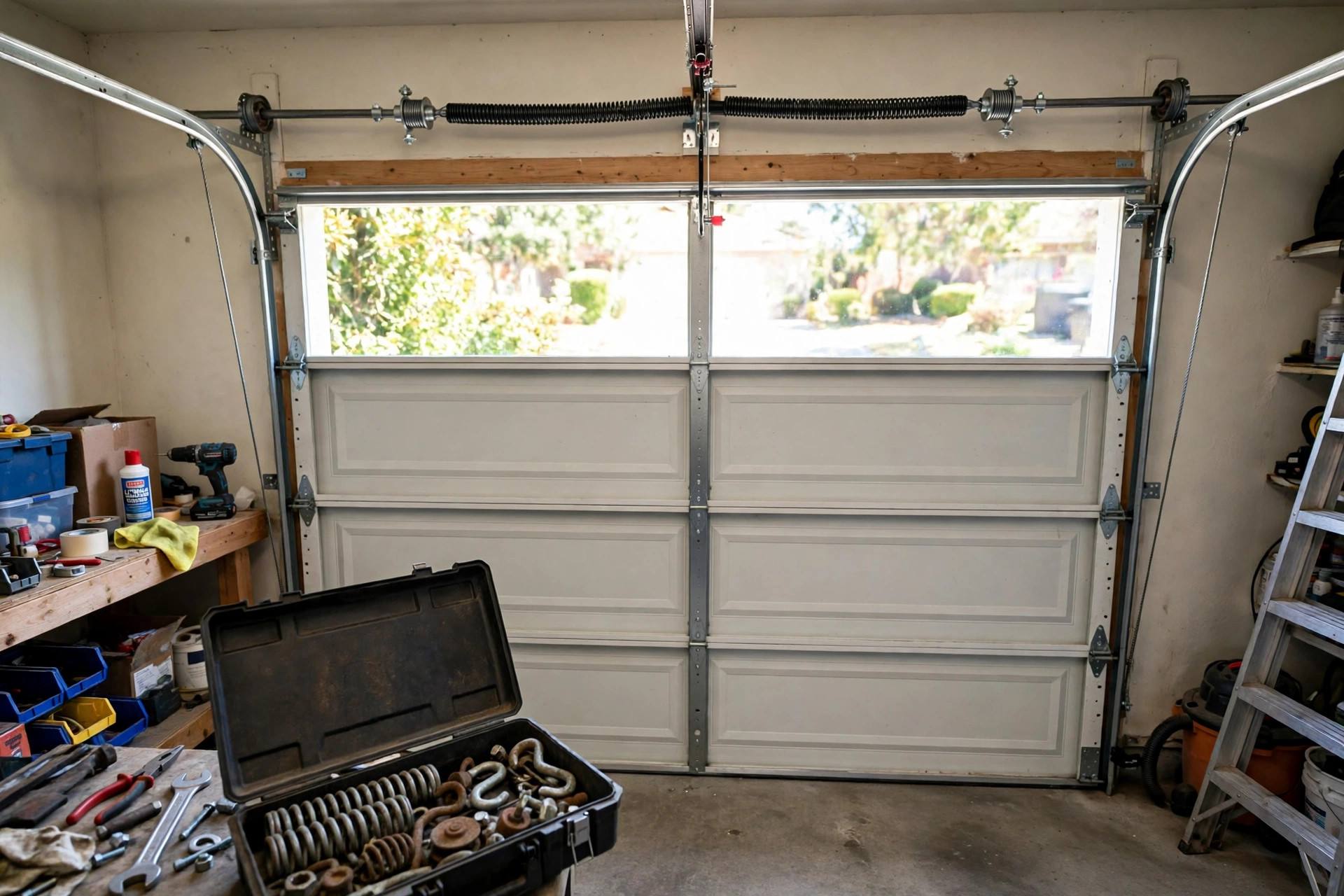
Conversion replaces extension springs, their pulleys, and their cables with a torsion shaft, torsion springs, and drums mounted above the door. The door then lifts from a single shaft system instead of two stretching springs along the tracks, which gives smoother, more even lift and removes the whipping risk of an uncontained extension spring.
It is a system change, not a like-for-like part swap. The shaft, drums, bearings, and cables all change together, and the door must be re-measured and re-balanced as a torsion door, not simply fitted with torsion parts and hoped for the best.
When conversion is, and is not, suitable
Conversion suits doors with enough headroom above the opening — one source cites a 12-inch minimum — and a door weight that a torsion system can counterbalance evenly. Low-headroom garages, very light doors, and doors with unusual track layouts may not suit it, and a technician should say so rather than force the conversion.
Older extension doors that keep breaking springs, doors where safety cables are missing or repeatedly damaged, and heavier doors that extension springs struggle to lift evenly are the strongest candidates. The decision is made after measuring headroom and weight, not from a photo.
What the finished job should feel like
A converted door should rise without one side leading, close without slamming, and hold its balance at waist height. Because the torsion system is contained above the door, there is no spring running along each track to whip if it fails, and future spring work is done on the shaft system rather than on two separate side springs.