
Spring Inspection and Tune-Up
Spring Inspection and Tune-Up is a spring-only service from Garage Door Spring Repair USA. This page explains spring inspection and tune-up in full: what the job covers, how it is sized, and what a finished spring inspection and tune-up job should feel like, so you can tell a complete job from a rushed one.
Safety note for spring inspection and tune-up: Spring tension work during spring inspection and tune-up is trained-technician work. Do not wind, unwind, or adjust a spring under tension at home during spring inspection and tune-up, and do not force a broken-spring door with the opener.
What a spring inspection actually checks
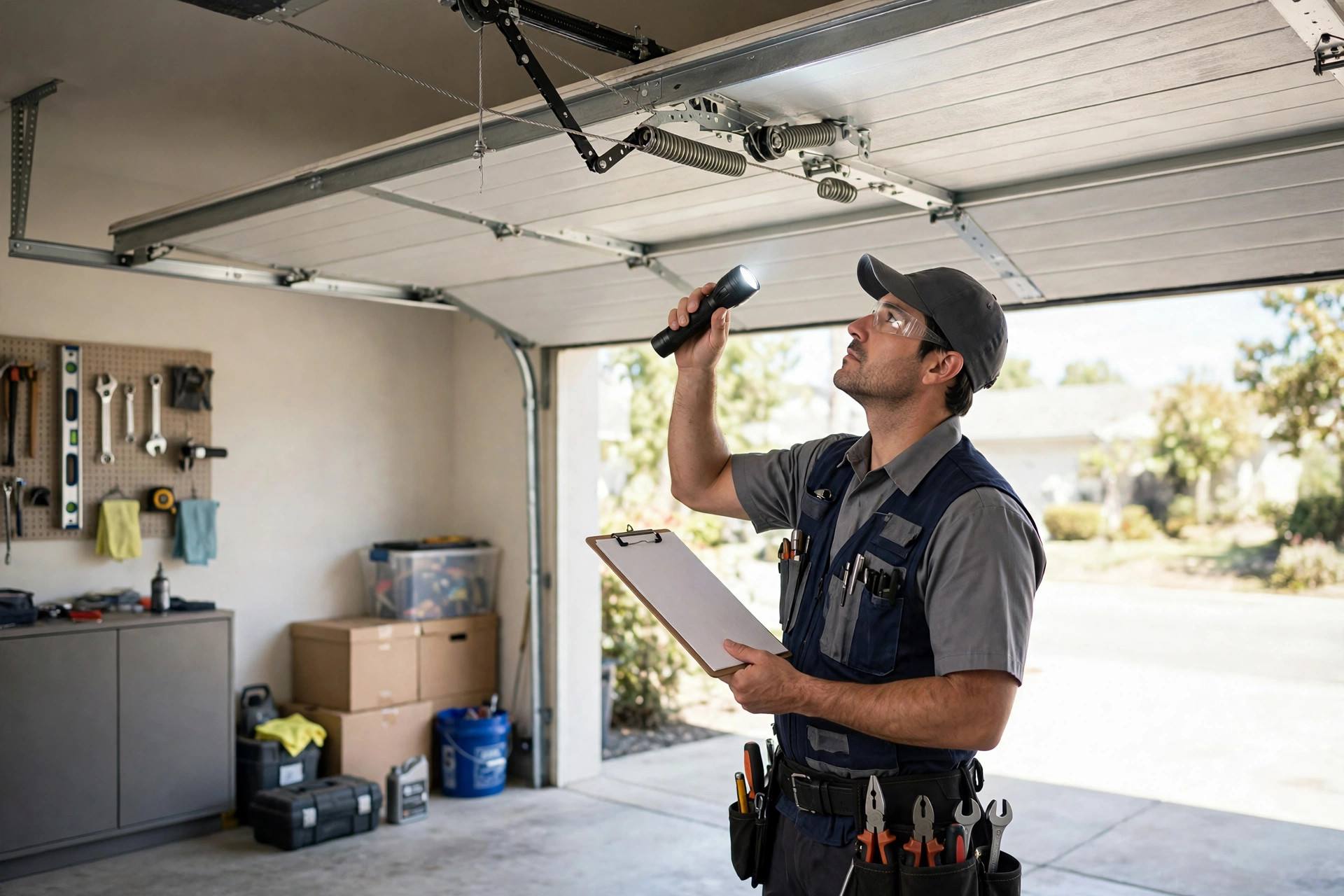
A spring inspection looks for the early warnings that a snap has not yet given: a coil gap, rust or corrosion on the spring, frayed or slack cables, a missing safety cable on an extension door, and a door that fails the balance test. Rollers, hinges, and bearings are checked and lubricated, because dry hardware can hide or mimic a spring problem.
The inspection deliberately excludes adjusting spring tension from the homeowner checklist. Tension work stays with a trained technician, and an inspection that finds a tension problem ends with a recommendation for that work, not with instructions to wind the spring at home.
When an inspection pays for itself
Doors used as the main entrance, doors over seven years old on standard springs, doors in damp or salty air, and doors that have started to sound different or feel heavier are all good candidates. Catching rust, a frayed cable, or a weakening spring at inspection is cheaper and safer than catching it as a bang and a stuck door.
Inspection also creates a record: spring type, cycle rating, and door weight, so the next replacement can be sized without guesswork. That record matters most on doors where the original spring markings have rusted away.
What the visit ends with
The visit ends with a plain list of what was found, what is safe, what needs work soon, and what needs work now, plus a balance test result. Lubrication of rollers, hinges, and bearings is done, but springs under tension are not lubricated or adjusted as a casual add-on, and any tension finding is booked as technician work.